

Massage chair importers and private-label brands are paying more attention to materials and quality control as customer expectations, warranty costs, export-market rules, and long-term durability requirements become more important in sourcing decisions. A beautiful showroom finish or an attractive spec sheet does not by itself establish that a chair will still perform well after a year of daily use. Premium material content and careful quality control are different concepts: a chair can be covered in expensive-looking leather without the frame, mechanism, foam, and electronics underneath meeting the demands of the target market. The most practical approach is to identify the applications the chair must serve, then evaluate materials, components, and production controls against the performance and compliance those applications require.
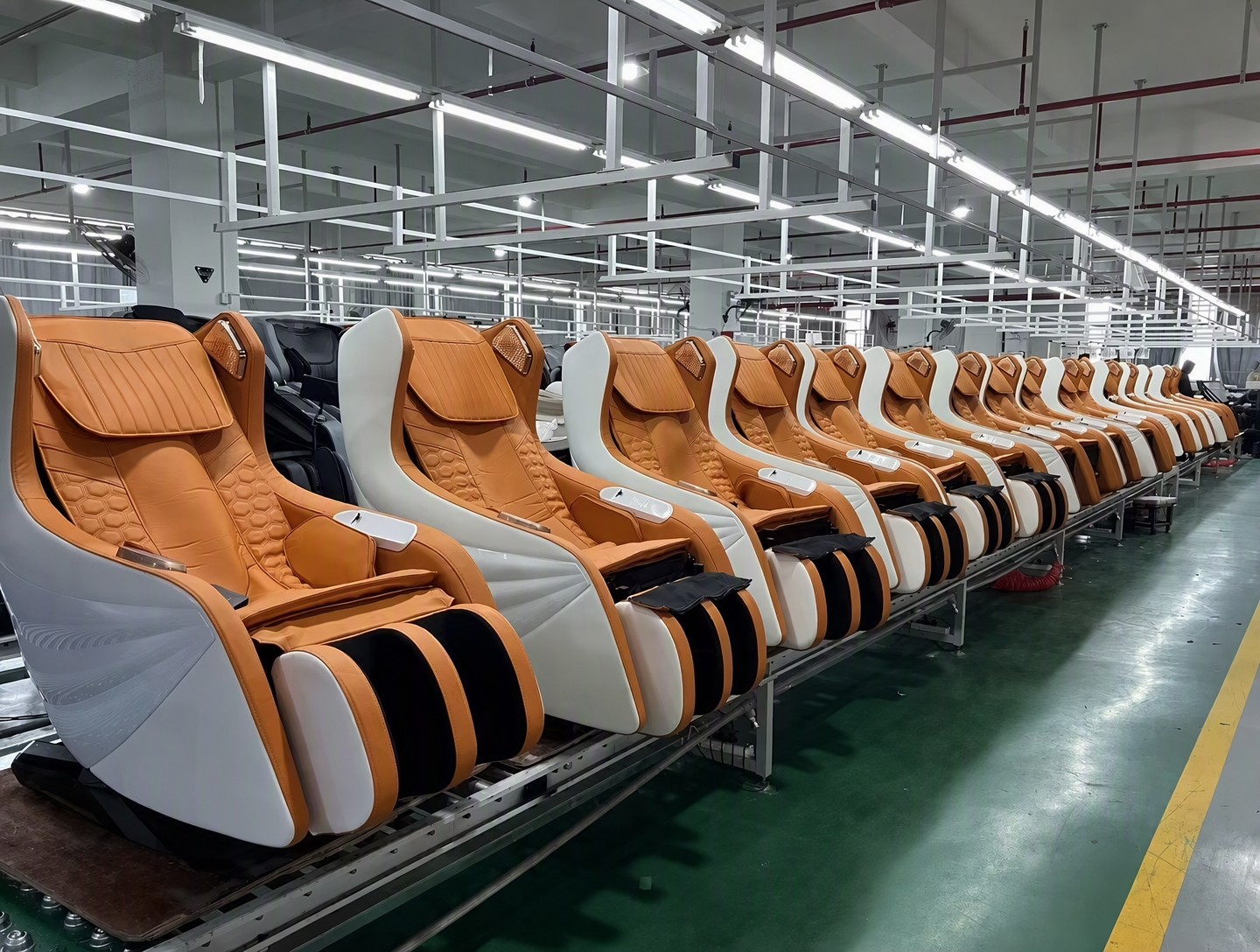
At Molink Tech, we manufacture massage chairs and wellness products in our own factory in Fu’an, Fujian Province, China, with an in-house process chain covering steel-frame welding, leather cutting, sewing, foam molding, mechanism assembly, electronic control assembly, final assembly, and outgoing inspection. We support OEM and ODM projects for customers in more than 50 countries. We recommend treating material selection as a product-engineering project rather than a simple component substitution, because the finished chair, not any single material, is what your customer experiences.
Why OEM Buyers Are Paying More Attention to Materials and Quality Control
Price competitiveness is one reason brands compare factories, but buyers also need to respond to customer complaints, warranty budgets, restricted-substance expectations, export-market certifications, and long-term aging and service-life requirements. Initial cost, appearance, and comfort remain important, but wear resistance, seam quality, frame strength, electrical safety, foam resilience, and application-specific compliance can be equally important. The real question is whether the finished chair can still meet the requirements of the market it is sold into.
For this reason, “premium material” should be viewed as one selection factor rather than a performance guarantee. A thick synthetic leather or a branded motor may support a marketing story, but permanence, including resistance to abrasion, cracking, seam failure, odor, and sagging, as well as regulatory suitability, still has to be demonstrated in the actual massage chair.
Which Massage Chair Applications Should Evaluate Materials First?
A practical way to screen sourcing priorities is to divide applications by validation difficulty rather than assume one material package fits every massage chair market.
| Application | Initial Evaluation Level | Key Performance Criteria |
|---|---|---|
| Home use, personal relaxation | Suitable for initial screening | Comfort, appearance, basic durability, noise, warranty period |
| Showroom, office, light commercial | Suitable for initial screening | Surface wear, seam strength, frame stability, cleaning ease |
| Hotel, spa, rental and high-traffic commercial | Requires broader validation | Abrasion resistance, cycle endurance, serviceability, fire behavior |
| Medical and rehabilitation use | High validation requirement | Electrical safety, material compliance, documentation, market certification |
Applications Suitable for Initial Screening
Home chairs, showroom models, and selected light-commercial products can be practical starting points because their key properties are relatively straightforward to compare in sample evaluation. Buyers can check leather surface feel, stitching consistency, cushion density, frame rigidity, noise level, heat and vibration functions, and general workmanship against the product specification before committing to volume production.
Medium-Priority Applications Requiring More Optimization
Hotel, spa, rental, and other high-traffic environments normally require a broader performance balance. A commercial chair may need a combination of abrasion-resistant upholstery, reinforced frame welding, higher cycle endurance of the massage mechanism, easily serviceable electronic controls, and stable foam that does not collapse under repeated use. In these cases the material package should be benchmarked against the dominant requirement of the operating environment, not against a general home-use standard.
Applications Requiring High Validation
Medical, rehabilitation, and other sensitive applications should not be treated as easy first-adoption targets simply because a factory offers attractive materials. They may require electrical safety evaluation, material compliance review, documentation, and certification assessment for the intended market. Define the intended use first, then confirm final suitability and compliance in the complete chair and finished product. This is especially important for regulated applications where the suitability of an individual component alone does not establish compliance of the final massage chair.
How to Judge Whether a Material or Component Is Suitable
| Evaluation Factor | What to Check |
|---|---|
| Upholstery leather | Material type, thickness, backing, surface feel, abrasion and cracking resistance, seam strength |
| Frame and structure | Steel type, welding quality, load capacity, stability, recline and zero-gravity support |
| Massage mechanism and motors | Mechanism type, noise level, cycle endurance, heat behavior, long-term reliability |
| Foam and cushioning | Density, resilience, sagging behavior, odor |
| Electronics and wiring | Wiring quality, connectors, control board, electrical safety, compliance documentation |
| Fire behavior and restricted substances | Flame-retardant requirements, restricted-substance expectations of the target market |
| Certification and documentation | Intended market, required certificates, test reports, traceability |
This screening approach helps prevent optimizing around a single impressive feature while overlooking the dominant requirement of the target application. For example, a chair that feels comfortable in a short showroom test may still be unsuitable for a hotel lounge if the upholstery abrades quickly or the mechanism cannot sustain repeated daily cycles. Likewise, good initial appearance alone does not establish sufficient durability for a long-service-life commercial installation.
Comparing Material Packages: What a Useful Comparison Looks Like
The useful comparison is not “premium material versus economy material” in isolation. It is whether the candidate package meets the same finished-product performance window as the benchmark your market requires.
| Performance Area | Premium Package | What to Verify |
|---|---|---|
| Upholstery durability | Higher-grade synthetic leather | Abrasion, cracking, seam strength under expected use |
| Frame strength | Reinforced steel frame | Load capacity, welding quality, stability at recline angles |
| Mechanism reliability | Higher-end mechanism and motors | Cycle endurance, noise, heat behavior in finished chair |
| Compliance readiness | CE, RoHS and FCC documentation | Certificate validity, scope, and market applicability |
Different massage chair markets require different property balances, so “better” only has meaning after the application and test criteria are defined. A package developed for occasional home use may be a poor reference point for a spa that runs chairs all day.
From Sample Evaluation to Finished-Product Validation
For initial screening, sample evaluation can provide a controlled way to compare material packages and production quality. Evaluate a pre-production sample against your specification and keep the same criteria for comfort, noise, workmanship, and function. Compare samples under the same conditions, and set acceptance criteria before testing.
Depending on the product, evaluation may include upholstery feel and wear, seam quality, frame stability, mechanism noise and smoothness, heating performance, control response, electrical safety, and general workmanship. Only after sample results meet your criteria should the project move to pilot production. The final decision should be based on the finished production chair, because serial production and shipping conditions can influence quality.
This sequence creates a more useful sourcing path:
Sample evaluation → pilot production → in-line quality inspection → finished-product validation → commercial decision.
How Molink Tech Supports OEM Material Evaluation
At Molink Tech, we run a complete in-house production chain in our Fu’an factory, including steel-frame welding, leather cutting, sewing, foam molding, mechanism assembly, electronic control assembly, final assembly, and outgoing inspection. Our products are manufactured with CE, RoHS and FCC compliance documentation, and we support OEM and ODM projects for customers in more than 50 countries.
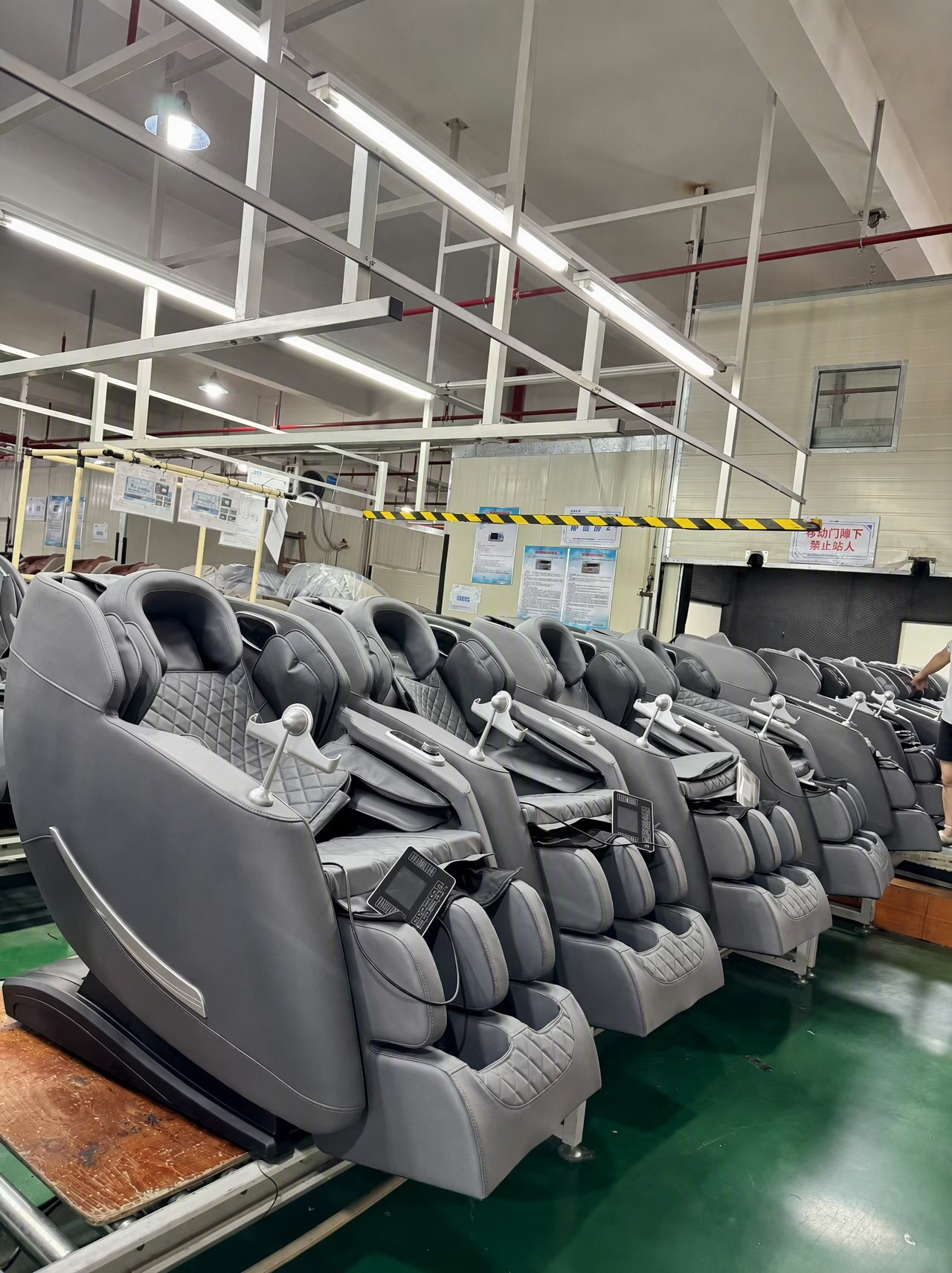
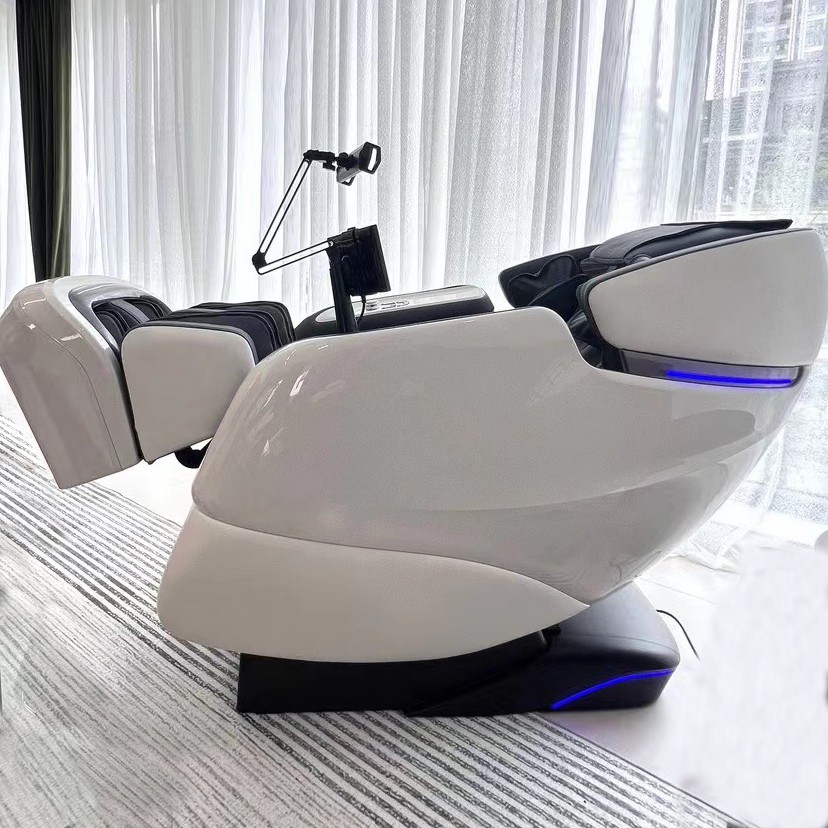
For customers evaluating a massage chair program, we can provide product information, material descriptions, and pre-production samples for preliminary evaluation before commercial qualification. Customers should still confirm the final specification, production conditions, finished-product performance, and compliance requirements for their own market.
Conclusion
Massage chair materials and quality control can be managed more effectively when buyers begin with the right application and a measurable validation plan. Home and showroom products may offer a more practical first evaluation, while hotel, spa, commercial, medical, and other demanding applications require progressively broader testing and documentation.
For brands exploring a private-label or OEM massage chair program, Molink Tech can be evaluated as a full-process manufacturer with in-house production, compliance documentation, and sample support. Start with sample evaluation, compare against your specification, and make the final decision after finished-product validation.
FAQ
Q: Can a premium-looking leather package guarantee long service life?
A: Not automatically. Durability depends on the material grade, stitching, foam, frame, mechanism, and how the chair is used. Sample evaluation and pilot production under defined acceptance criteria are usually a more practical starting point than assuming that appearance alone predicts reliability.
Q: Which massage chair markets should evaluate materials first?
A: Home chairs, showroom models, and selected light-commercial products can be suitable for initial evaluation. Hotel, spa, rental, medical, and other demanding environments normally need additional testing and documentation before adoption.
Q: How should a buyer compare one factory’s material package with another?
A: Compare by the property that matters most to the finished product in your market. Check upholstery durability, frame and mechanism reliability, electronic safety, and compliance documentation, then test samples under the same conditions to determine the practical difference.
Q: Does Molink Tech provide samples for OEM evaluation?
A: Yes. Molink Tech can provide product information and pre-production samples for preliminary evaluation. The final specification, production conditions, finished-product performance, and market compliance should be confirmed before commercial qualification.
Contact Molink Tech to request product information or samples for your massage chair OEM or ODM evaluation.